“The Freedom Project?”

In this video, you see women so desperate to break out of the grueling living circumstances they live every day in North Korea that they decided to put their lives on the line and pay brokers to help cross into China but end up being sold into sex slavery. A cybersex operator bought these women and forced her to stay in a building for 5 years. They worked awful hours and hardly slept. They were beaten by their captor and only allowed them to leave once every six months. They had to do anything and everything their customers told them to do…

60% North Korean female refugees in China were trafficked into the sex trade.

“I want to stress that the Chinese governemnt pays high attention to foreign citizens’ legitimate rights according to law and also combats activities of human trafficking women and children.”

-Chinese Foreign Ministry Spokesperson

It’s scary to see how many women are captured and forced into this industry. It’s already scary for them to try and leave and leave North Korea because their family can be killed if they’re found. The capture of refugees and forced trafficking and sexual assault needs to stop.


If you want to see the article click here
Sex Trafficking: What is it?

I wanted to include what Sex Trafficking really looks like. What to look out for and the actual definition of this act.

“#Sextrafficking happens when on person causes another to take part in sexual behaviors to gain something of value. Anyone could be a trafficker, including someone a person knows or trusts. Sex Trafficking is always illegal and never the fault of the victim. Watch the full video to learn more about Sex Trafficking and how you can help someone in need by telling a trusted adult.”

This video show’s what sex trafficking is and is super informative. Click here if you want to watch more

Want to help?

I wanted to add phone numbers and hotlines that are available if you ever are in need of help or know of someone seeking help:

National Center for Missing & Exploited Children

1-800-843-5678

If you have information about a missing child or suspected child sexual exploitation, call to report it or visit their website.

National Human Trafficking Hotline

1-888-373-7888

The National Human Trafficking Hotline is a national, anti-trafficking hotline and resource center serving victims and survivors of human trafficking and the anti-trafficking community in the United States. The toll-free hotline is answered live 24 hours a day, 7 days a week, 365 days a year. For more information, visit www.humantraffickinghotline.org.

The National Runaway Switchboard

1-800-RUNAWAY

For more information, visit www.1800RUNAWAY.org The National Runaway Switchboard serves as the federally-designated national communication system for homeless and runaway youth.  NRS, with the support of more than 150 volunteers, handles an average of 100,000 calls annually – more than 3 million calls since the organization’s inception.  Through hotline and online services, NRS provides crisis intervention, referrals to local resources, and education and prevention services to youth, families and community members throughout the country 24 hours a day, 365 days a year.

U.S. Immigration and Customs Enforcement

1-866-347-2423 (U.S. & Canada)
1-802-872-6199 (International Calls)

ICE’s hotline to report suspected child predators and any suspicious activity.
Call or complete an online tip form.

I took all of these contacts from https://sharedhope.org/join-the-cause/report-trafficking/

How to identify a victim of Human Trafficking

Although it may be tricky to necessarily know if someone is or has been in the circle of being trafficked it’s important to be aware of what the usual characteristics of those who fall victim to the industry are. Human trafficking is everywhere even if we may not know it’s happening. The industry is rapidly growing and it’s important to look for the signs.

Pimps and traffickers often show these characteristics:

  • Jealous, controlling and violent
  • Significantly older than female companions
  • Promise things that seem too good to be true
  • Encourage victims to engage in illegal activities to achieve their goals and dreams
  • Buys expensive gifts or owns expensive items
  • Is vague about his/her profession
  • Pushy or demanding about sex
  • Encourages inappropriate sexual behavior
  • Makes the victim feel responsible for his/her financial stability. Very open about financial matters.

Someone who may be subjected to trafficking may show these characteristics:

  • Signs of physical abuse such as burn marks, bruises or cuts
  • Unexplained absences from class
  • Less appropriately dressed than before
  • Sexualized behavior
  • Overly tired in class
  • Withdrawn, depressed, distracted or checked out
  • Brags about making or having lots of money
  • Displays expensive clothes, accessories or shoes
  • New tattoo (tattoos are often used by pimps as a way to brand victims. Tattoos of a name, symbol of money or barcode could indicate trafficking)
  • Older boyfriend or new friends with a different lifestyle
  • Talks about wild parties or invites other students to attend parties
  • Shows signs of gang affiliation? (ie: a preference for specific colors, notebook doodles of gang symbols, etc.)

***NOTE: All of these characteristics are broad generalizations***

To read more about what to look for click here

Where is Human Trafficking most prevalent?

I think a big question I have repeatedly asked myself since beginning my blog is: Where is Human Trafficking most prevalent in the world?

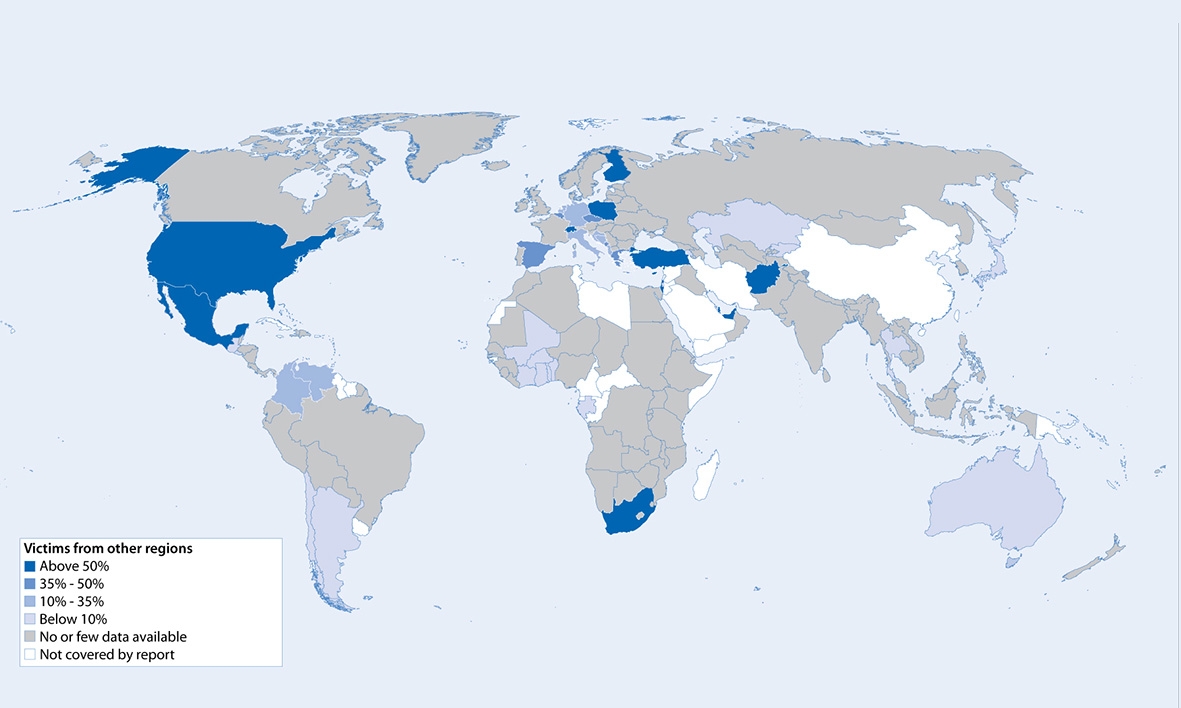
According to Wikipedia people are mostly trafficked in these specific countries: “Pakistan, Thailand, China, India, and Bangladesh are in the top 10 for countries with the largest number of trafficking victims around the world”

According to the site India holds the #1 spot with 14 million trafficked people a year, followed by China with 3.2 million. These two countries don’t come to a shock to me because these two countries are two of the most populated places in the world. The United States also has a high percentage of trafficked victims, estimating hundreds of thousands are being trafficked in highly populated states.

Image result for where is human trafficking most prevalent

To read more about where human trafficking is prevalent click here

The Reality of Human Trafficking

This article touches on how many Canadians talk about how human trafficking doesn’t occur in Canada and how lucky we are to live in a country such as ours. In fact, it happens so much more than we realize.

Human trafficking is even more prevalent in Canada now due to massage parlors, these “institutions”/ businesses are finding loopholes saying that they offer full body massages (which they really mean).


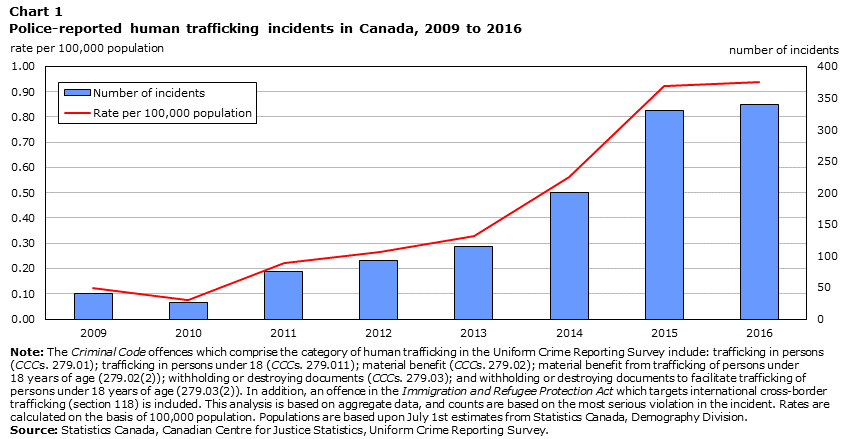
Chart 1 Police-reported human trafficking incidents in Canada, 2009 to 2016

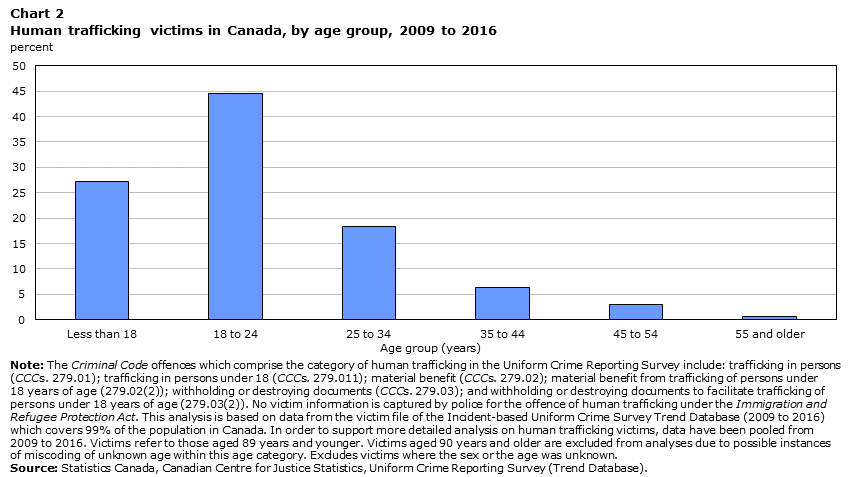
Chart 2 Human trafficking victims in Canada, by age group, 2009 to 2016


What is Human/Sex Trafficking?

hu·man traf·fick·ing
noun
“The action or practice of illegally transporting people from one country or area to another, typically for the purposes of forced labor or sexual exploitation.”
“she is a victim of human trafficking”
This specific industry thrives because of the high demand, Commercial Sexual Exploitations is a worldwide multi-billion dollar industry, they victimize millions.
Sex trafficking makes approximately $99 billion a year. Domestic servitude profits approximately $8 billion,  and forced labor exploitation profits approximately $43.2 billion.  Sex trafficking makes up 66% of human trafficking. 

Human trafficking is so popular today due to how easy it is to lure victims into the industry. It’s a way that pimps/ dealers can make quick cash and a lot of cash.


The victims who are most affected by Human Trafficking is 14-16 years old, usually, they’re too young to realize what’s actually going on.


Related image

If you want to read more about what sex trafficking entails click here

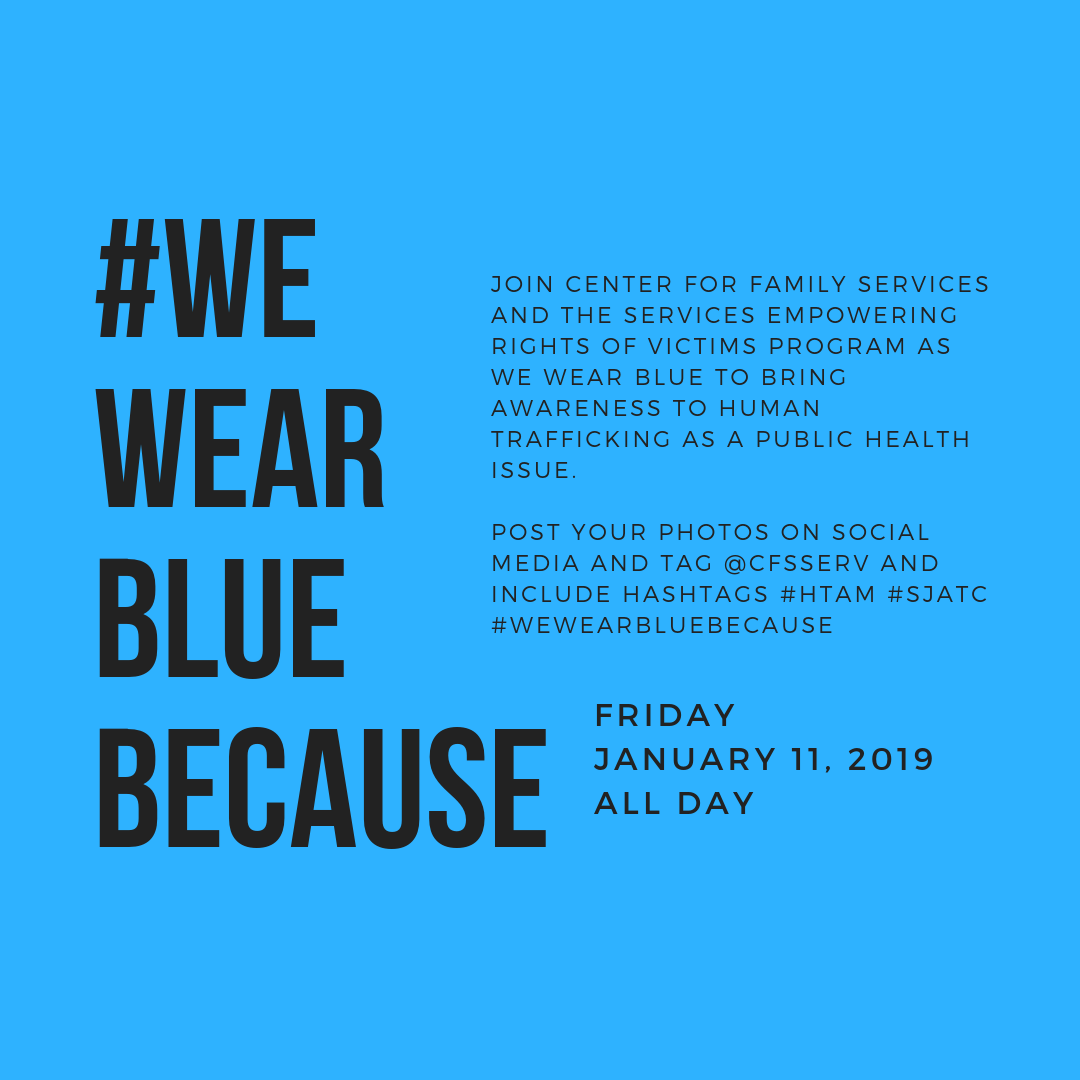
Human Trafficking Awareness Day

January 11th is National Human Trafficking awareness day.  

This day came to be in 2010, by presidential proclamation that not only January be National Human Trafficking awareness day but the entire month is dedicated of January is National Slavery and Human Trafficking Prevention.

“As we work to dismantle trafficking networks and help survivors rebuild their lives, we must also address the underlying forces that push so many into bondage. We must develop economies that create legitimate jobs, build a global sense of justice that says no child should ever be exploited, and empower our daughters and sons with the same chances to pursue their dreams. This month, I call on every nation, every community, and every individual to fight human trafficking wherever it exists. Let us declare as one that slavery has no place in our world, and let us finally restore to all people the most basic rights of freedom, dignity, and justice.”                                                                                                                                    -Barack Obama

The purpose of having the month being dedicated to this cause is to bring awareness to this evergrowing issue amongst the world. Approximately 800,000 people are trafficked each year. Even if we can help save 1% of that number that is 8000 women, children and men being saved from exploitation in some way.

The more we talk about the said issue the more lives can be saved and the more people will talk about the issue. It’s time we take a stand and help those who are victims and survivors of trafficking and exploitation. Image result for national human trafficking awareness day

To read the article about National Human Trafficking day click here

To read the presidential proclamation click here

“Canada’s stolen Daughters”

A recurring theme in Canada is the missing and murdered aboriginal women in Canada. Indigenous people don’t get nearly enough support from the government, media or nation as they should because they are seen as a minority. Topics such as this one are often subjective to people turning a blind eye and staying quiet instead of speaking out.

Research done by Dr. Mark Totten concluded that most of the indigenous trafficking is done within the borders of Canada primarily in major cities such as Vancouver, Winnipeg, Regina, Edmonton, and Calgary. Although, predominantly in the prairies and small towns and cities in B.C.

Some terrifying statistics done by AMR planning and consulting:

  • “There are about 400 children and youth exploited on the streets of Winnipeg each year, 70-80% of which are of Aboriginal descent.
  • The process of grooming and prepping Aboriginal children and youth for entry into the sex trade is a long process that begins in childhood.
  • Most participants have a family history that involves residential schools and/or the child welfare system.
  • Youth are more likely to work the street trade than the indoor trade, working most often in cars and trick pads.
  • Predators are typically middle to upper class white males.”

A huge percentage of women are introduced into trafficking through external affairs and find themselves trapped and sadly fall victim to human trafficking.


If you want to see the stats click on the link here